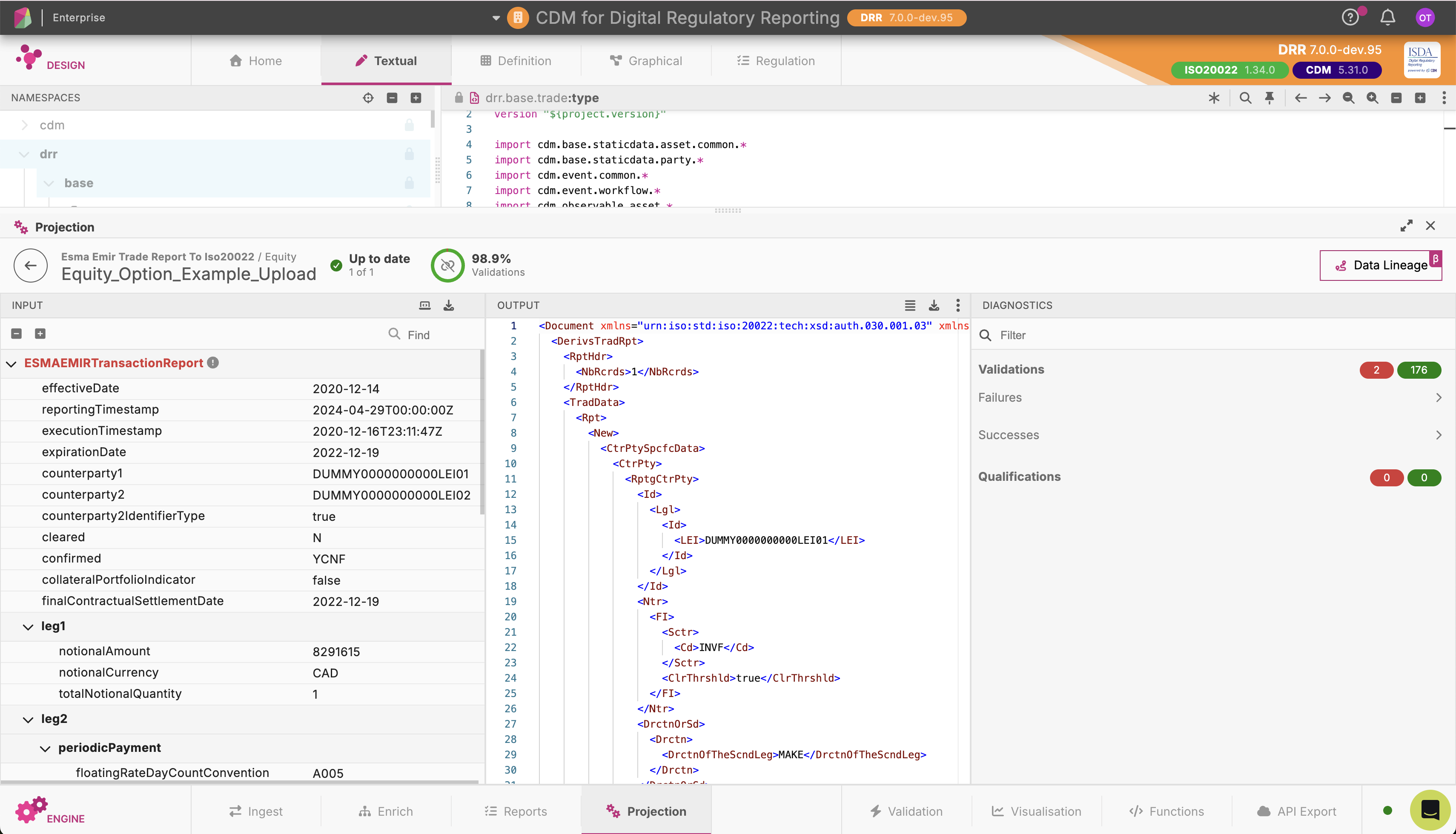
DRR data journey using Rosetta
This page explains the full end-to-end workflow using the RosettaRosetta REGnosys’s proprietary platform used as an execution engine for DRR. platform for converting an FpMLFpML Financial Products Markup Language Recordkeeping XMLXML Extensible Markup Language. Text-based format used to store and transport data in a structured way that both humans and machines can read. into a:
-
DRRDRR Digital Regulatory Reporting. An industry‑developed, machine‑executable interpretation of regulatory rules that produces consistent, transparent and fully traceable reporting outputs from standardised CDM data. ReportableEvent
-
TransactionReportInstruction
-
Regulatory transaction report, and finally
-
ISO 20022 XMLXML Extensible Markup Language. Text-based format used to store and transport data in a structured way that both humans and machines can read. projection
1. Ingest
1.1. Create a DRRDRR Digital Regulatory Reporting. An industry‑developed, machine‑executable interpretation of regulatory rules that produces consistent, transparent and fully traceable reporting outputs from standardised CDM data. workspace in Rosetta.
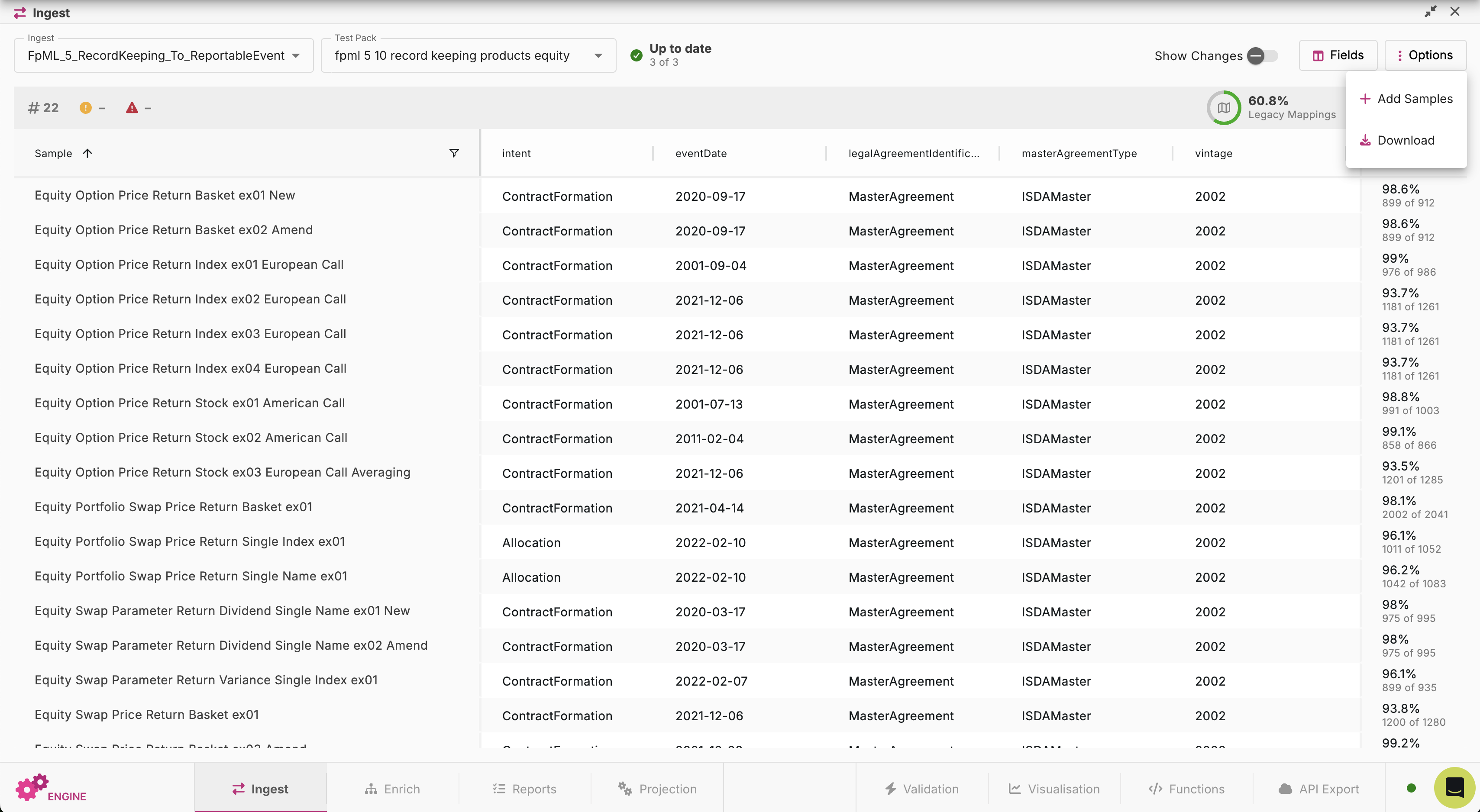
1.2. Open the Ingest panel.
1.3. Upload your own FpMLFpML Financial Products Markup Language sample or select a preloaded test file (e.g. Equity Option Price Return Basket ex01 New).
RosettaRosetta REGnosys’s proprietary platform used as an execution engine for DRR. uses these functions to ingest different FpMLFpML Financial Products Markup Language message types to produce CDMCDM Common Domain Model. A standardised, machine-readable and machine-executable blueprint for how financial products are traded and managed across the transaction lifecycle. It is represented as a domain model and distributed in open source. or DRRDRR Digital Regulatory Reporting. An industry‑developed, machine‑executable interpretation of regulatory rules that produces consistent, transparent and fully traceable reporting outputs from standardised CDM data. object outputs:
FPML Confirmation To TradeState– Ingests the message to create a CDMCDM Common Domain Model. A standardised, machine-readable and machine-executable blueprint for how financial products are traded and managed across the transaction lifecycle. It is represented as a domain model and distributed in open source.TradeStateoutput. This represents only the trade itself, providing a snapshot at a specific point in time without any business event details or regulatory information.FPML Confirmation To WorkflowStep– Ingests the message to create a CDMCDM Common Domain Model. A standardised, machine-readable and machine-executable blueprint for how financial products are traded and managed across the transaction lifecycle. It is represented as a domain model and distributed in open source.WorkflowStepoutput. This adds context about the business event being applied (such as contract formation). The output includes bothTradeStatedata and the associatedBusinessEvent details.FPML Confirmation To ReportableEvent– Ingests the message to create a DRRDRR Digital Regulatory Reporting. An industry‑developed, machine‑executable interpretation of regulatory rules that produces consistent, transparent and fully traceable reporting outputs from standardised CDM data.ReportableEventoutput. The output containsTradeStateandWorkflowStepinformation, along with regulatory data related to the trade, such as the financial nature of the counterparty.
Of these three ingest functions, only FPML Confirmation To ReportableEvent produces a DRRDRR Digital Regulatory Reporting. An industry‑developed, machine‑executable interpretation of regulatory rules that produces consistent, transparent and fully traceable reporting outputs from standardised CDM data. object (ReportableEvent) as its output. This is because the input message includes regulatory information that allows it to be ingested directly into a ReportableEvent.
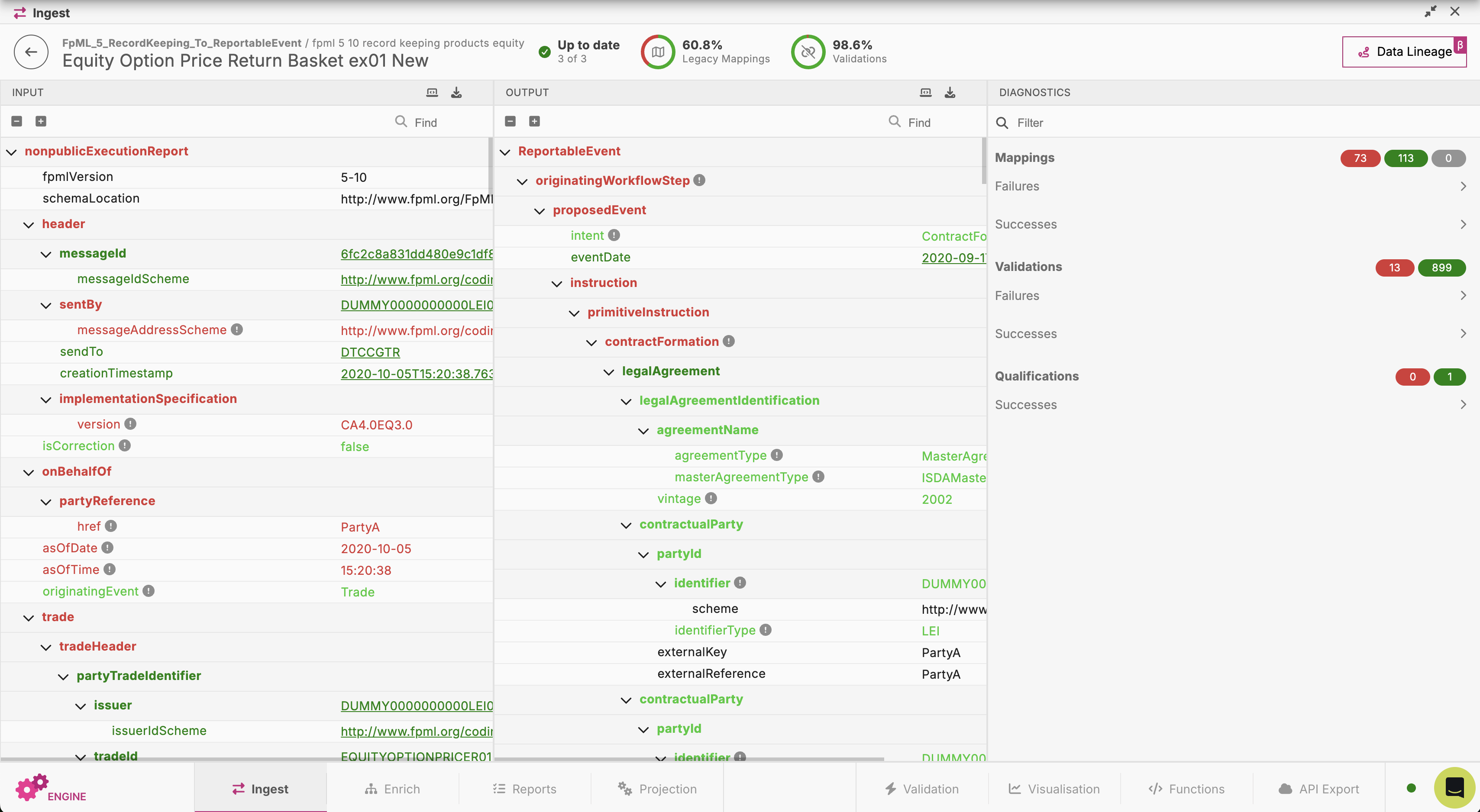
1.4. When the FPML 5 Confirmation To ReportableEvent function is called, it directly produces a DRRDRR Digital Regulatory Reporting. An industry‑developed, machine‑executable interpretation of regulatory rules that produces consistent, transparent and fully traceable reporting outputs from standardised CDM data. ReportableEvent as an output. The diagnostics on the right of the screen reveal any issues in the testing.
2. Enrich
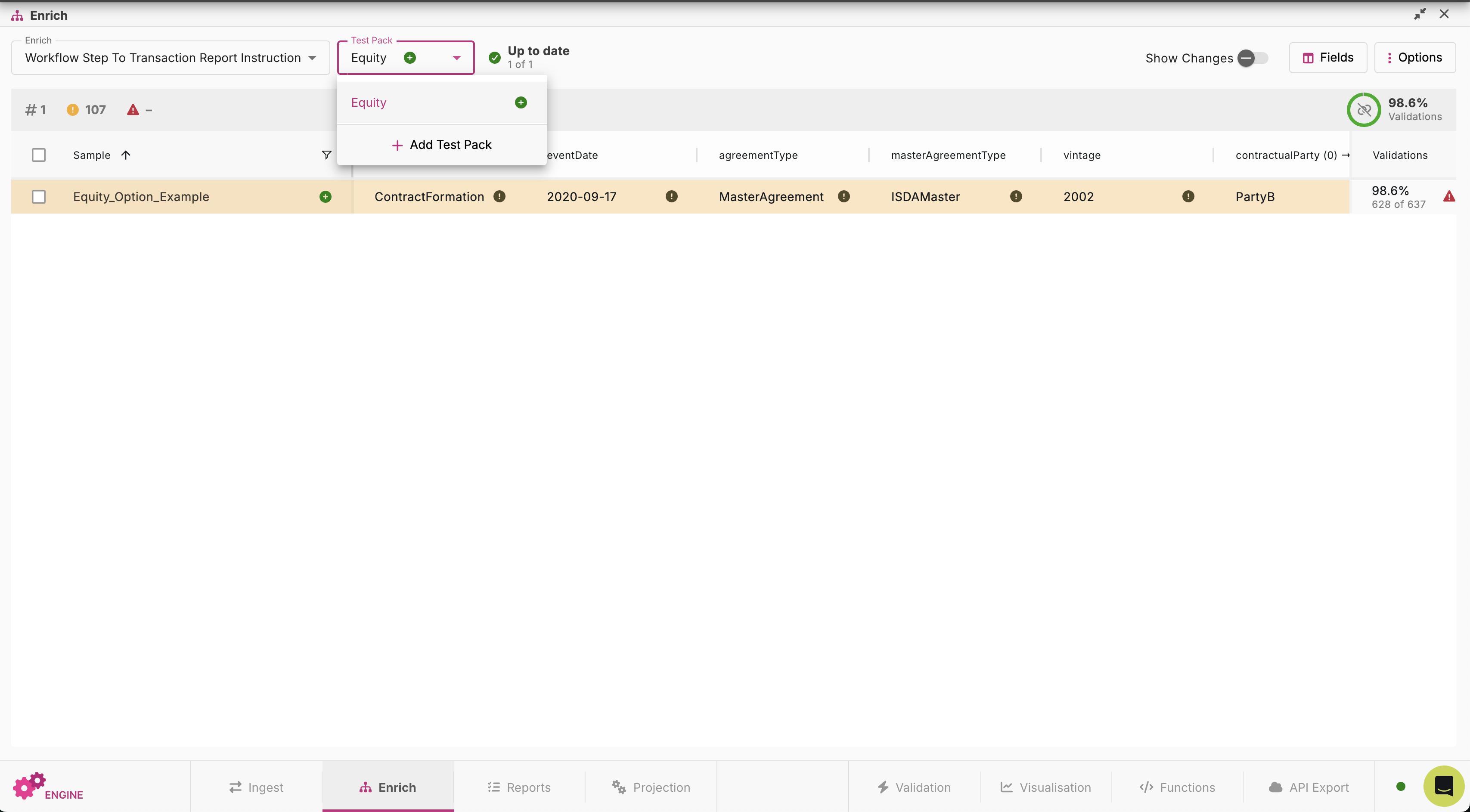
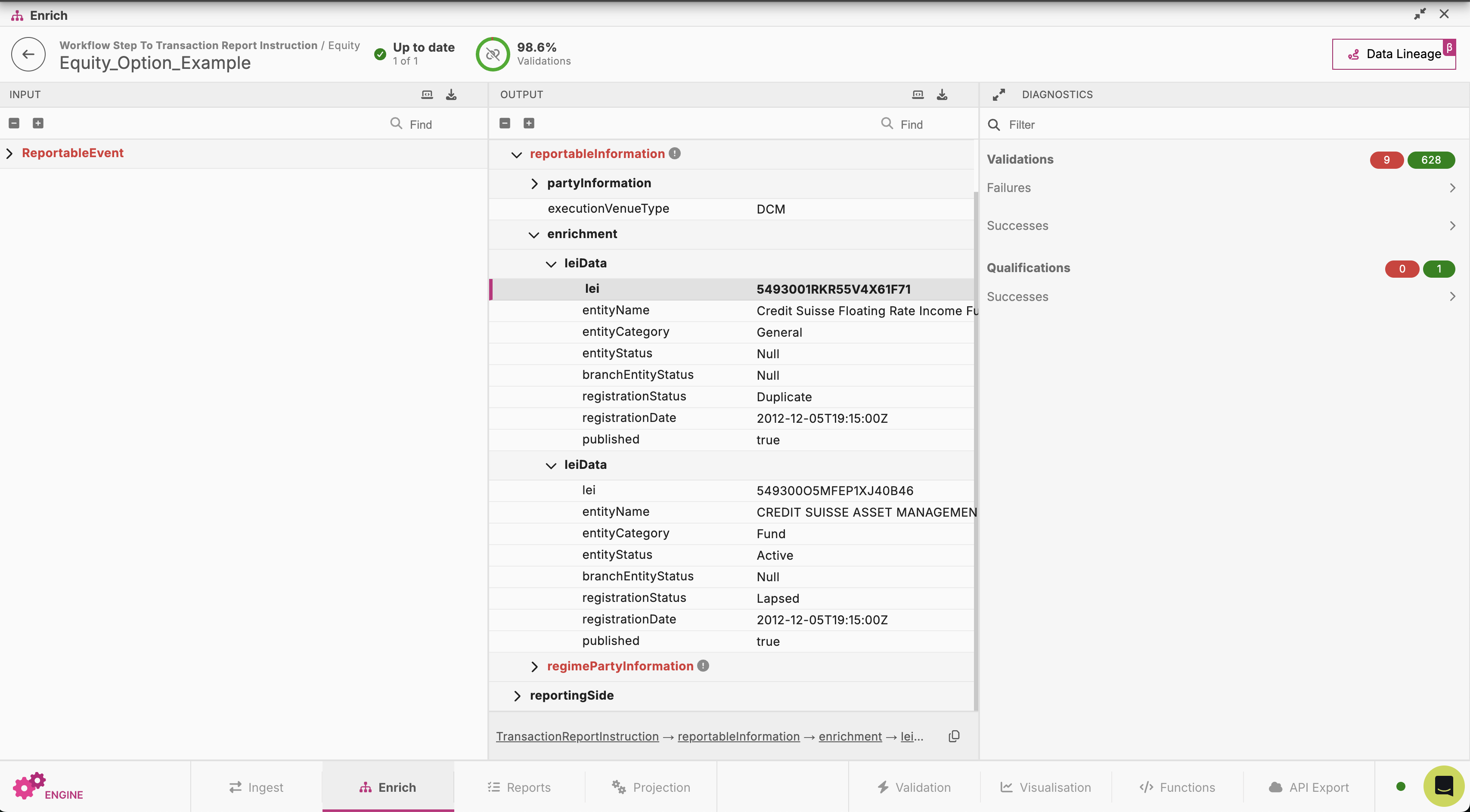
2.1. Open the Enrich panel.
2.2. Select the Enrich function from the dropdown.
2.3. Upload ReportableEvent from the previous step or select a preloaded test file from the table of samples. (e.g. Equity).
2.4. The Enrich service runs and produces a DRRDRR Digital Regulatory Reporting. An industry‑developed, machine‑executable interpretation of regulatory rules that produces consistent, transparent and fully traceable reporting outputs from standardised CDM data. TransactionReportInstruction enriched with additional required data from internal or external sources.
3. Reports
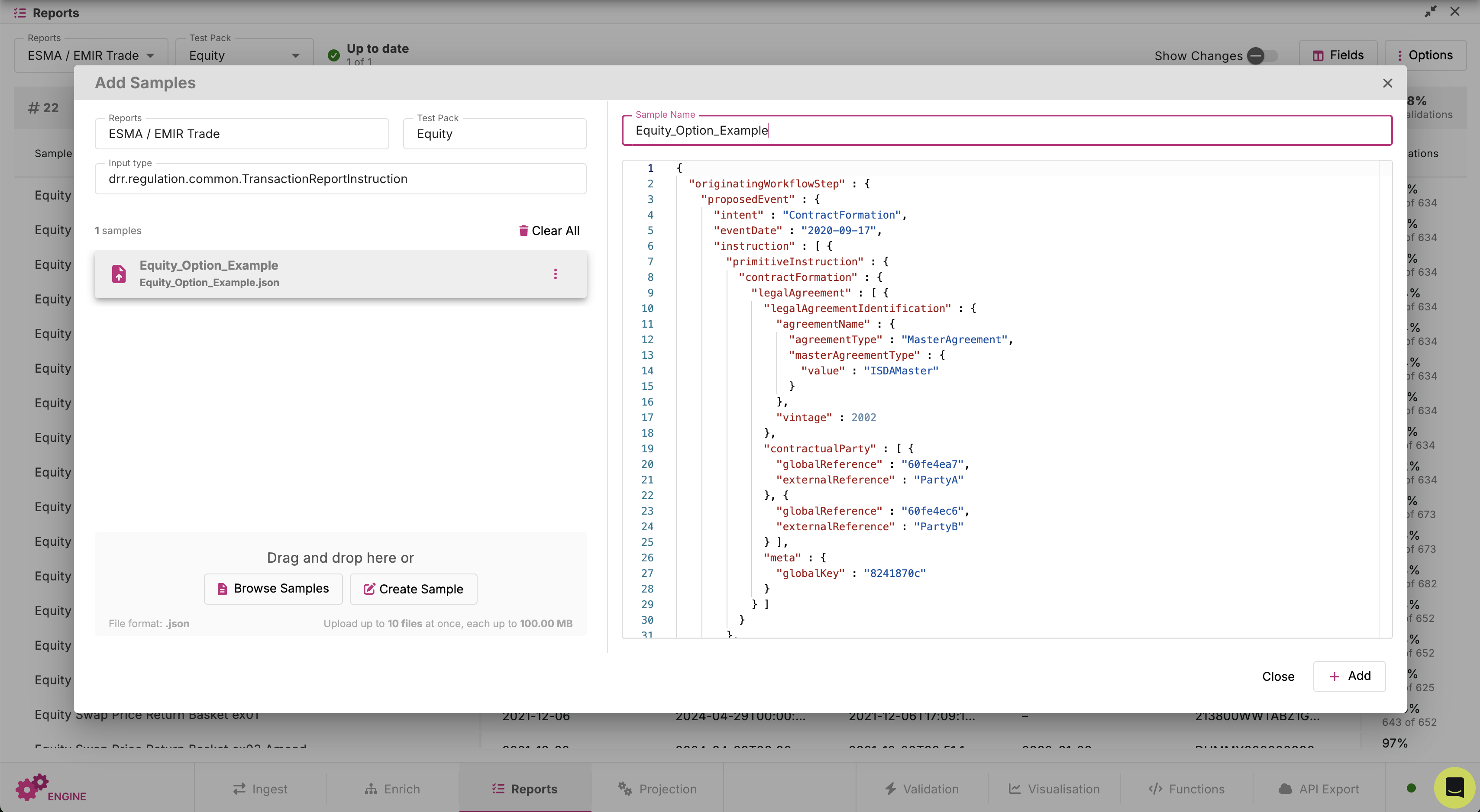
3.1. Open the Reports panel.
3.2. Select a report type (e.g. ESMAESMA European Securities and Markets Authority – EU‑level regulator responsible for securities markets, including EMIR reporting. / EMIREMIR European Market Infrastructure Regulation – the European Union’s main rulebook for regulating derivatives markets. Trade) and a test pack (e.g. Equity).
3.3. Upload the TransactionReportInstruction from the previous step (e.g. Equity_Option_Example) or select a preloaded test file from the table of samples.
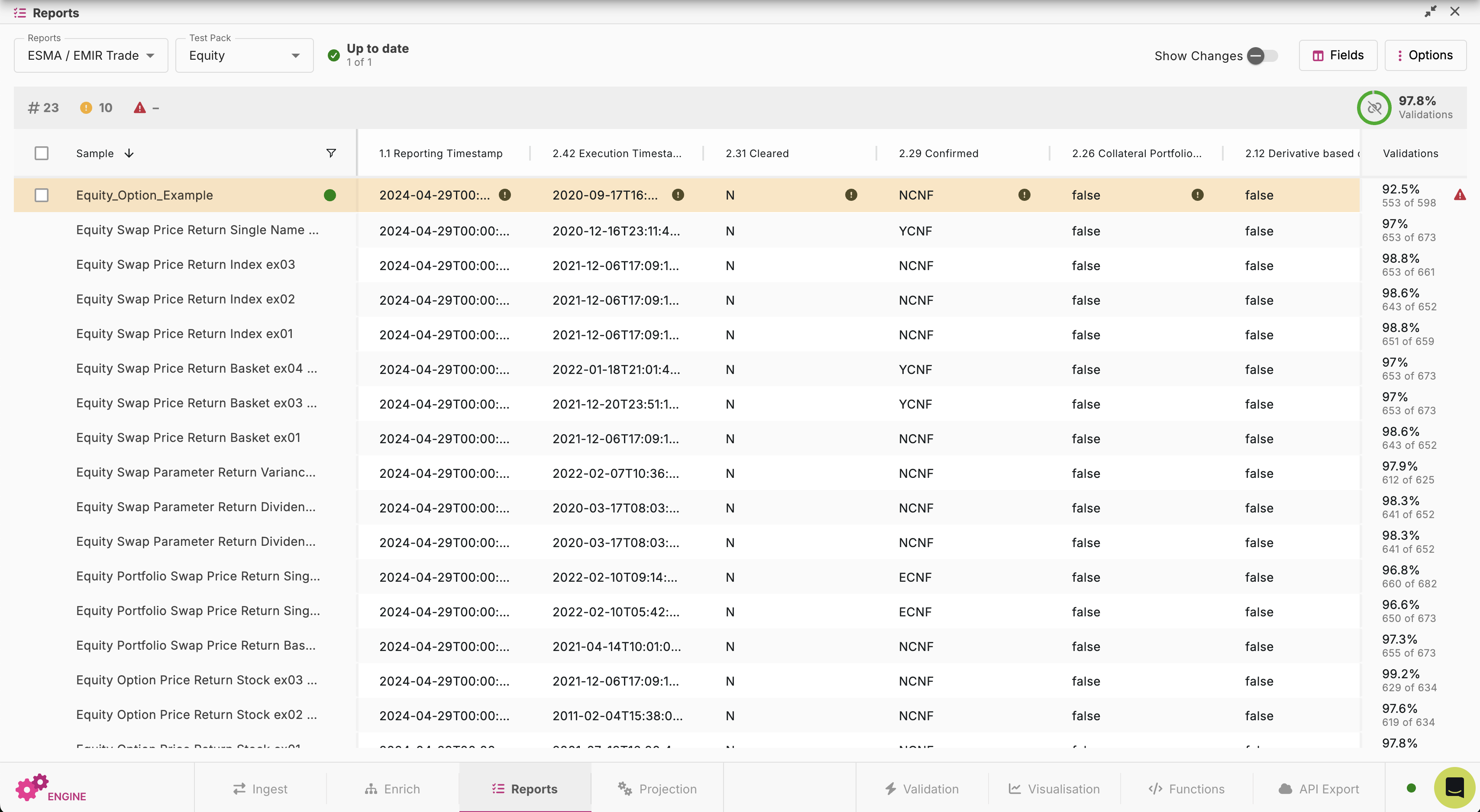
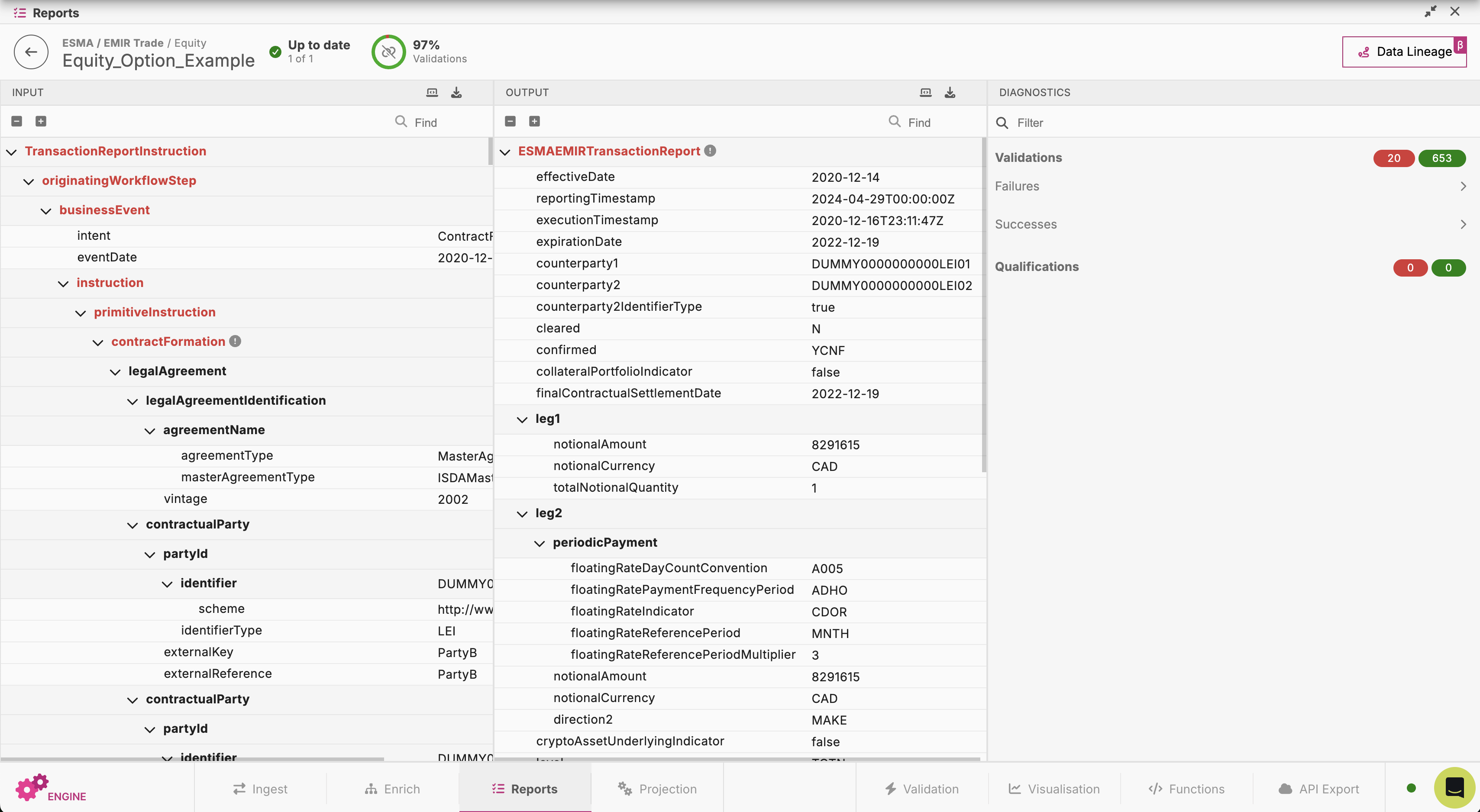
3.4. The Report service runs and produces a single regime-specific TransactionReport with that regime's logic applied.
4. Projection
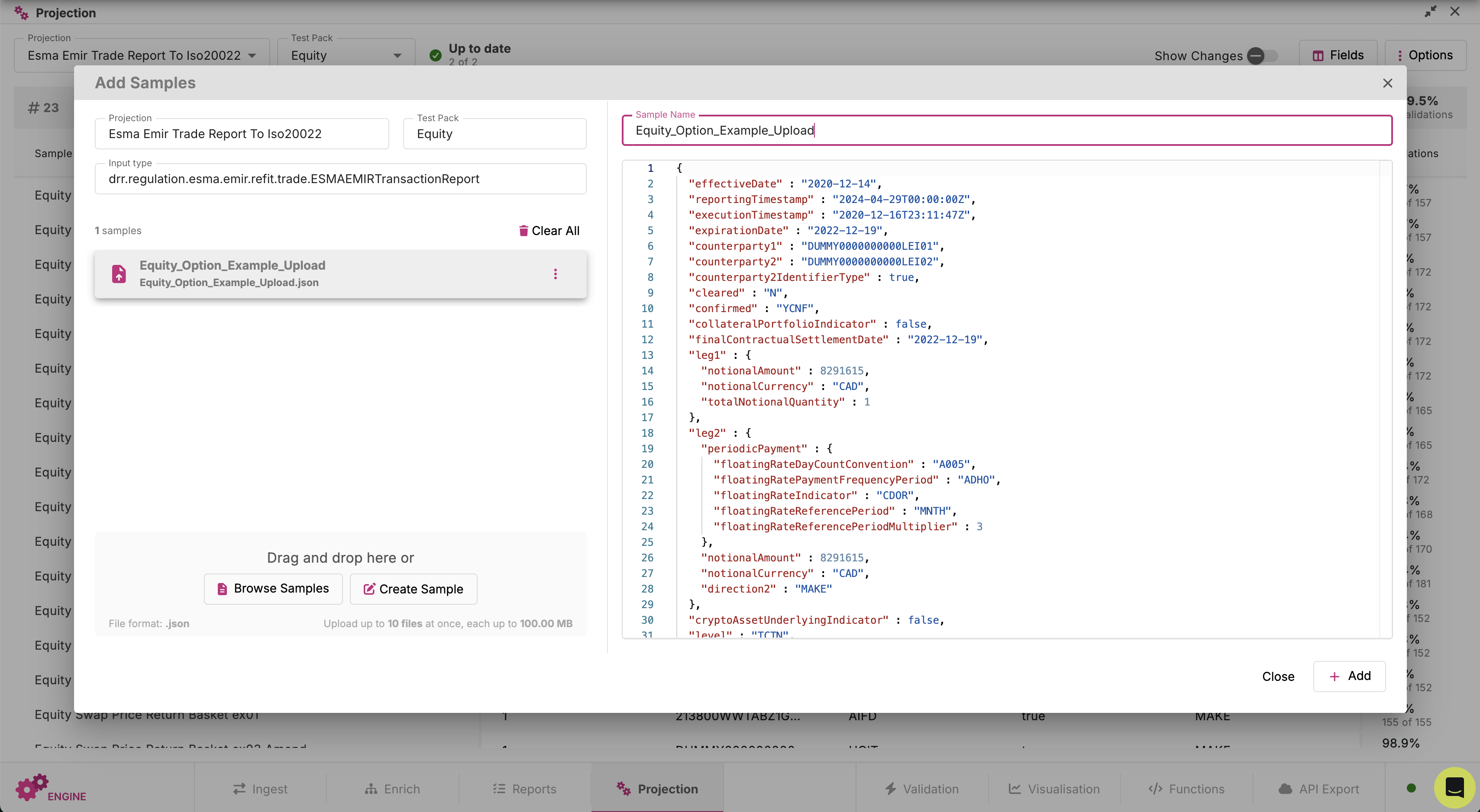
4.1. Open the Projection panel.
4.2. Select a projection (e.g. EsmaEmirTradeReportToIso20022) and a test pack (e.g. Equity).
4.3. Upload the TransactionReport JSONJSON JavaScript Object Notation. Text-based, language-independent format with key-value pairs (eg Name: Dave). from the previous step (e.g. Equity_Option_Example_Upload) or select a preloaded test file from the table of samples.
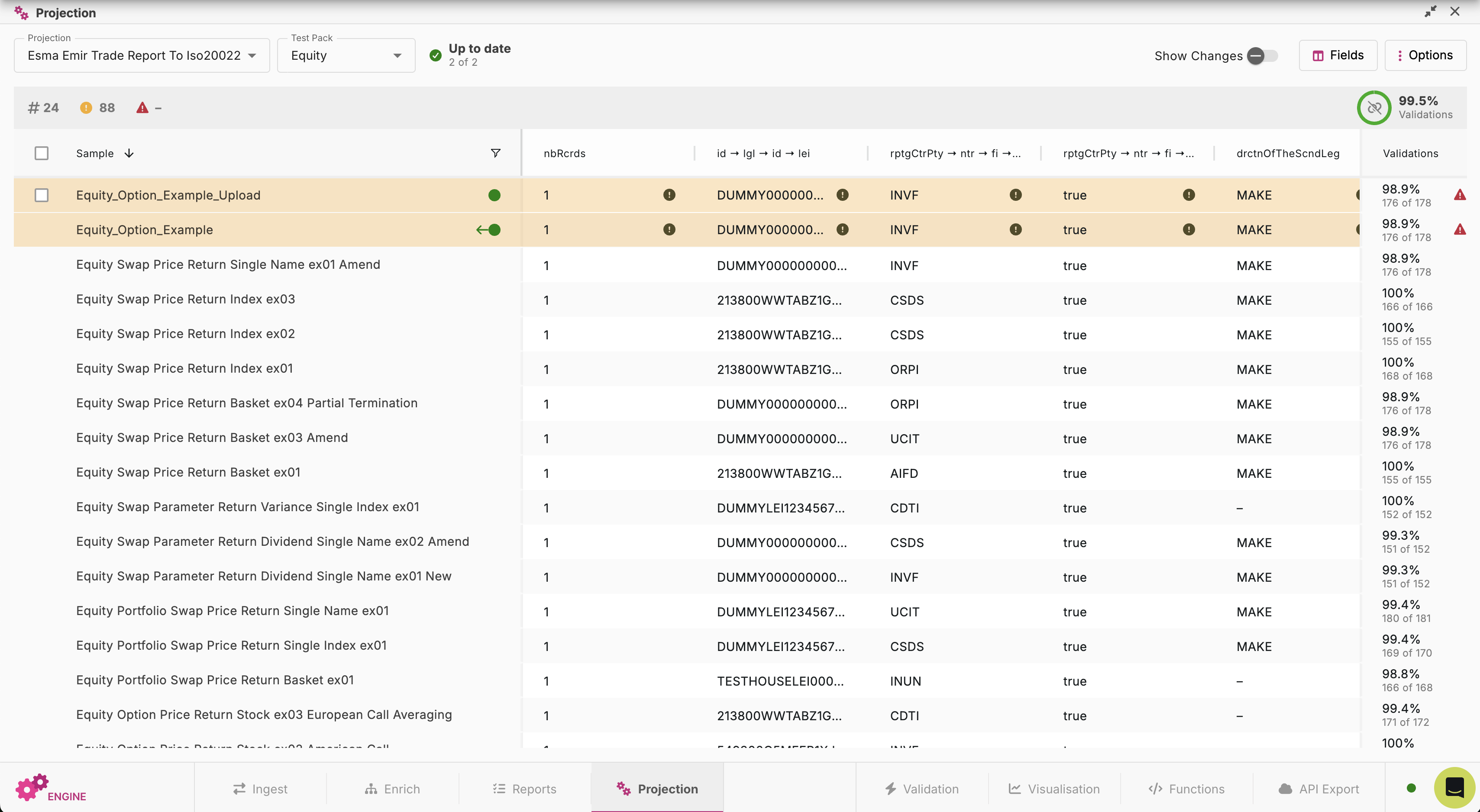
4.4. The Projection service runs and produces the correctly formatted projection for the chosen regime (e.g. ISO 20022 XMLXML Extensible Markup Language. Text-based format used to store and transport data in a structured way that both humans and machines can read., DTCC Harmonized XMLXML Extensible Markup Language. Text-based format used to store and transport data in a structured way that both humans and machines can read.).